In summary:
- Your glove is a critical “grip system” interface; a tight fit is non-negotiable for control.
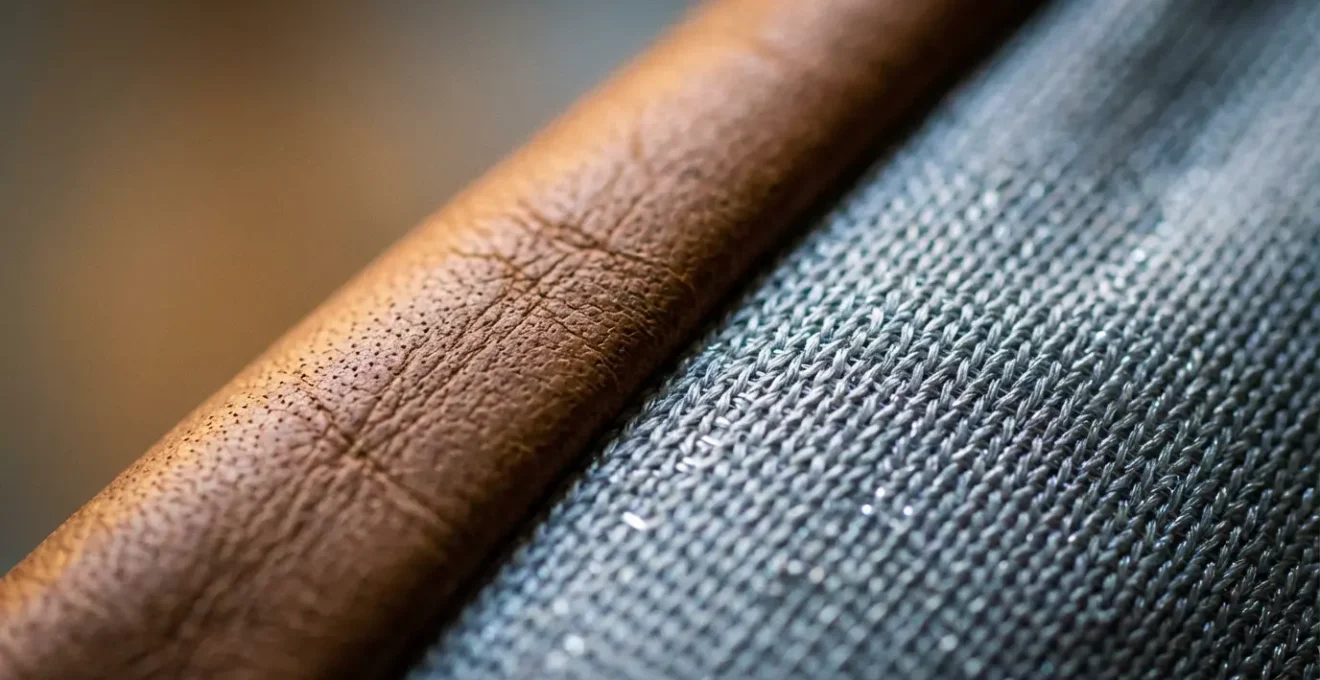
- Cabretta leather offers superior feel, while synthetics provide better grip in wet or humid conditions.
- Proper care and rotation can triple a glove’s lifespan and save you money.
- A worn glove or club grip compromises safety and performance, especially when wet.
- Your glove’s wear pattern can diagnose swing faults related to grip pressure.
For any golfer, but especially one whose hands sweat or who plays in humidity, there’s no worse feeling than the club twisting at the top of the backswing. That momentary loss of control is a round-killer. Most players blame their hands or the weather, immediately seeking out a different glove material. They debate the merits of soft Cabretta leather versus a high-tech synthetic, believing the answer lies in a simple product switch. This debate, while common, misses the fundamental point.
The real issue isn’t just about choosing leather or synthetic. It’s about understanding that your glove, hand, and club grip form an interconnected grip system. A failure in any one part compromises the whole. While popular advice focuses on material choice, the true key to a secure grip lies in mastering the entire lifecycle of your glove: achieving a perfect “second skin” fit, implementing a smart rotation strategy, and knowing when the glove—or the club’s grip itself—has reached the end of its useful life.
This guide moves beyond the simple “leather vs. synthetic” argument. We will treat your glove as the critical piece of performance equipment it is. We’ll deconstruct why fit is paramount, how different materials manage moisture, and how a proactive care strategy is the secret to both performance and longevity. You’ll learn not just what to buy, but how to manage your entire grip system for unwavering confidence on every swing, no matter the conditions.
For those who prefer a condensed visual format, the following video provides a great overview of the top-rated golf gloves on the market, tested and approved by fellow golfers. It’s an excellent complement to the detailed fitting and care strategies we are about to explore.
To help you navigate this comprehensive guide, we’ve broken down the key elements of mastering your grip system. From the fundamentals of a proper fit to advanced diagnostic tips, this structure will walk you through everything you need to know to secure your connection to the club.
Summary: A Practical Guide to Your Golf Grip System
- Second Skin: Why Your Golf Glove Should Feel Tight When You Buy It?
- Rain Gloves: Why You Should Ditch Leather When It Starts to Pour?
- Crusty Gloves: How to Prevent Your Leather Glove from Drying Out?
- Rotation Strategy: Why You Need Two Gloves for a Summer Round?
- Cadet vs Regular: Do You Have Short Fingers and a Wide Palm?
- Slippery When Wet: When Is It Time to Regrip Your Clubs for Safety?
- Graphite vs Steel: Which Material Is Better for Golfers with Arthritis?
- Why a Proper Grip Is the Only Way to Fix Your Slice Without Changing Your Swing?
Second Skin: Why Your Golf Glove Should Feel Tight When You Buy It?
The single most important factor in a glove’s performance is not its material, but its fit. A glove that is too large creates a moving layer between your hand and the grip. This slippage, even if microscopic, forces you to grip the club tighter to maintain control. This excess tension ruins your tempo and feel. The goal is a fit that acts like a second skin, eliminating any and all movement. According to fitting experts, this is a widespread issue, as their research indicates that upwards of half of all golfers are estimated to be wearing gloves that are too big.
When you first try on a new glove, especially a Cabretta leather one, it should feel noticeably tight. You should have to give it a firm tug to get it on. There should be no loose material or wrinkles across the palm or in the fingers. When you fasten the Velcro tab, about a quarter-inch of the hook-and-loop patch should remain visible. This ensures that as the leather naturally stretches and molds to your hand with use, the fit will remain snug rather than becoming loose.
A proper fit creates a unified friction interface. Your hand, the glove, and the club grip move as one solid unit, allowing you to hold the club with lighter pressure. This light-pressure grip is the foundation of a fluid, powerful swing and a sensitive feel for the clubhead. An ill-fitting glove makes this impossible.
Your Action Plan: The Perfect Fit Checklist
- Check for “Second Skin” Feel: Ensure the glove fits snugly with absolutely no excess material bunching in the palm or along the fingers.
- Inspect Fingertip Space: Your fingertips should be very close to the ends of the glove’s fingers, with no significant empty space.
- Verify the Closure Tab: When you fasten the glove, about a 1/4 inch of the Velcro patch should remain uncovered. This allows for stretching.
- Test Your Flexibility: Make a fist. The glove should feel tight but should not restrict the natural movement or clenching of your hand.
- Anticipate Stretching (Leather): For a Cabretta leather glove, expect it to feel almost uncomfortably snug initially. It is designed to stretch and mold perfectly to your hand after one or two uses.
Rain Gloves: Why You Should Ditch Leather When It Starts to Pour?
When humidity spikes or a drizzle begins, a premium Cabretta leather glove can become your worst enemy. Leather absorbs moisture, causing it to become slick and lose its tackiness. This is where synthetic materials and specially designed rain gloves excel. Unlike leather, the synthetic suede or microfiber material used in rain gloves has a unique property: its friction coefficient increases when wet. Moisture activates the material, making it feel tackier and providing a surprisingly secure grip.
This principle was confirmed during field testing of the FootJoy Rain Grip gloves. Testers playing in a steady drizzle found that while other aspects of the game were challenging, the suede material became exceptionally tacky when damp, allowing for complete control during full swings. The glove effectively neutralized the primary danger of playing in the rain: a slippery club.
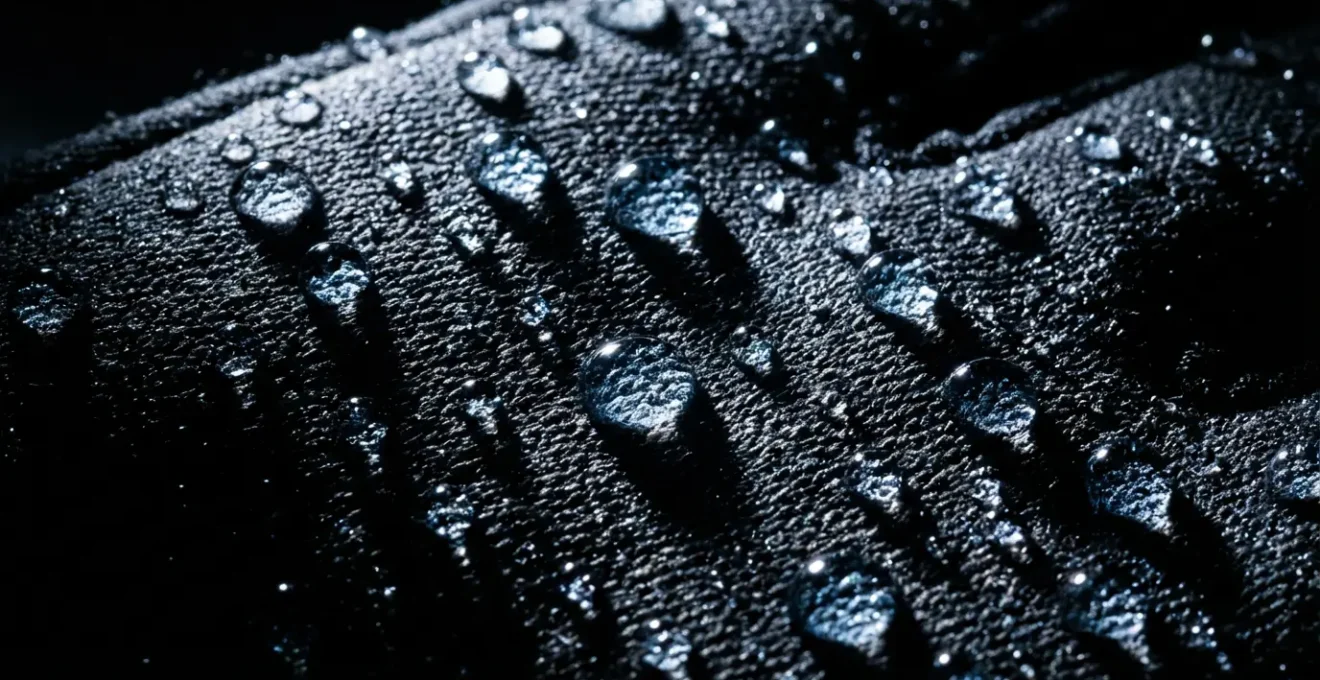
As seen in the image above, synthetic materials are often hydrophobic, meaning they repel water rather than absorb it. This prevents the glove from becoming waterlogged, heavy, and slick like leather. For any golfer who plays in humid climates or is frequently caught in showers, a pair of dedicated rain gloves is not a luxury; it’s a non-negotiable piece of safety and performance equipment. They are typically sold in pairs to ensure both hands remain dry and maintain a consistent connection to the club.
Crusty Gloves: How to Prevent Your Leather Glove from Drying Out?
Every golfer knows the disappointment of pulling out their favorite Cabretta leather glove only to find it stiff, crusty, and unwearable. This happens when the natural oils in the leather are stripped away by sweat and then dry out improperly. The good news is that with a simple post-round routine, you can dramatically extend its life. In fact, a well-maintained glove should last for 15 to 20 rounds, compared to just 5-8 for a neglected one.
The enemy of a leather glove is the “stuff and forget” method—crumpling it up and shoving it into a pocket of your golf bag. This traps moisture and salt from your sweat, which breaks down the leather as it dries. Instead, adopt a simple care process:
- Immediately after your round, remove the glove and wipe off any surface dirt or excess moisture with a clean, dry towel.
- While it’s still slightly damp, gently pull it back into its original shape.
- Never use a hairdryer or leave it in direct sunlight. Lay it flat or hang it in a cool, shaded area to air dry naturally. This can take up to 24 hours.
- Once completely dry, store it flat in its original sleeve or a sealable plastic bag to protect it from humidity and prevent it from being crushed.
This table clearly shows how your storage choice directly impacts the glove’s lifespan. Simply avoiding the bottom of your bag can double or even triple the number of rounds you get from a single glove.
| Storage Method | Glove Lifespan | Pros | Cons |
|---|---|---|---|
| Flat in Original Packaging | 15-20 rounds | Maintains shape, prevents creasing | Takes more space |
| Sealed Bag/Ziplock | 12-18 rounds | Protects from moisture, portable | Must ensure completely dry first |
| Bottom of Golf Bag | 5-8 rounds | Convenient | Gets crushed, retains moisture, deteriorates quickly |
| Velcro to Bag Exterior | 10-15 rounds | Airs out between uses | Exposed to elements |
Rotation Strategy: Why You Need Two Gloves for a Summer Round?
For players with sweaty hands, or on any hot, humid day, a single glove is not enough. As you play, your glove absorbs perspiration, and even the best moisture-wicking technology has its limits. Once a glove becomes saturated, it starts to slip. The professional’s solution is simple: glove rotation. By carrying at least two gloves, you can switch to a fresh, dry one on the back nine. This allows the first glove to air out, attached to your bag or cart, so it’s ready if needed later. This simple act drastically improves grip consistency through the end of your round.
This strategy extends beyond a single round. Top instructors advise using different gloves for practice and play. Use a more durable, less expensive synthetic or a worn leather glove for hitting balls on the range, and save your premium Cabretta glove for the course. This alone can exponentially increase the lifespan of your “gamer” glove. Many pros also remove their glove for chipping and putting, not just for better feel, but to give the glove a break and limit its exposure to sweat.
The value of a multi-glove system is best summarized by experts who have studied equipment durability. As one prominent golf equipment specialist noted in a MyGolfSpy study:
Owning and rotating three gloves allows each one to dry completely between uses, a critical factor that can make them last as long as five gloves used sequentially to failure.
– Golf Equipment Specialist, MyGolfSpy Golf Glove Durability Study
This isn’t about extravagance; it’s about smart asset management. Investing in three gloves and rotating them is more cost-effective in the long run than buying five and wearing each one out completely.
Cadet vs Regular: Do You Have Short Fingers and a Wide Palm?
Even with the right size number (e.g., Medium, Large), you might still have a poor fit. This often happens to golfers who have palms that are wider than average but fingers that are shorter. For them, a regular glove will have excess material at the fingertips, while a size smaller will be too tight across the palm. The solution is the Cadet-sized glove. Cadet gloves have the same palm width as their regular counterparts but feature shorter finger stalls.
If you constantly find a small pocket of empty space at the end of your glove’s fingers, or if the material bunches up in your palm when you make a fist, you are a prime candidate for a Cadet size. You can perform a quick self-assessment to be sure:
- Put on your usual regular-sized glove.
- Make a fist and check for any significant material bunching in the palm area.
- Straighten your hand and examine the fingertips. If there is more than 1/8th of an inch of extra material, you should try a Cadet.
- Test a Cadet glove in the same size. It should eliminate the palm bunching while providing that crucial “second skin” fit at the fingertips.
Finding the perfect fit is about exploring all options. In a surprising twist, it’s not just about Cadet sizing. For ultimate performance, some players find the best fit outside of standard men’s lines. According to FootJoy, several male tour professionals actually wear women’s gloves because their hand shape is better suited to that specific cut, providing the tight, flawless fit they demand. This highlights a critical lesson: ignore the label and focus solely on the fit.
Slippery When Wet: When Is It Time to Regrip Your Clubs for Safety?
Even the best glove in the world—leather or synthetic—cannot save you from worn-out club grips. The glove and the grip are two halves of the same system. If one fails, the system fails. A new, tacky glove can partially compensate for older grips, but a worn glove paired with worn, hardened grips is a recipe for disaster. This is especially true in humid or wet conditions, where the lack of surface friction on the grip itself becomes the primary point of failure.
A field test in extreme Florida summer conditions (95°F heat, 80% humidity) perfectly illustrated this system failure. Testers found that even a premium glove struggled to maintain control when paired with worn grips. The glove became damp, but the hard, slick surface of the old grip offered no assistance. However, when the same quality glove was used with a fresh set of grips, performance was consistent and secure throughout the round, despite the extreme heat and moisture. The fresh, tacky rubber of the new grip provided the friction the damp glove could not.
So, when is it time to regrip? The general rule of thumb is once a year or every 40 rounds, whichever comes first. However, for players in hot, humid climates, this may need to be more frequent. Visual inspection is key. Look for shiny, smooth patches, cracking, or a general loss of tackiness. If a grip feels more like hard plastic than soft rubber, its performance is compromised. Delaying regripping for cost reasons is a false economy; it jeopardizes both your performance and your safety, as the risk of the club slipping from your hands on a full swing becomes very real.
Graphite vs Steel: Which Material Is Better for Golfers with Arthritis?
For golfers with arthritis or hand fatigue, the entire grip system must be optimized for comfort, not just performance. This goes beyond the glove to the club itself. The choice between graphite and steel shafts plays a huge role. Graphite shafts are significantly lighter and absorb more vibration on impact than steel shafts, making them the superior choice for anyone looking to reduce stress on their hands, wrists, and elbow joints.
However, the glove remains a critical component of this comfort-focused system. While thin Cabretta leather provides maximum feel, it offers minimal padding. Golfers with arthritis should consider thicker, padded synthetic or hybrid gloves. These gloves are specifically designed to dampen vibrations. A hybrid glove, for example, might combine a Cabretta leather palm for feel and grip with a stretchable, breathable synthetic backing. This design provides the best of both worlds: the gripping ability of leather with enhanced comfort and a more forgiving fit that can reduce hand fatigue.
To build a complete comfort system, golfers with arthritis should focus on several key equipment choices:
- Glove Material: Choose thicker synthetic or hybrid gloves with extra padding in the palm and thumb areas to dampen vibration.
- Glove Features: Look for models with moisture-wicking properties to reduce the need for high grip pressure, and consider compression-fit gloves that can help support the joints.
- Club Grips: Pair your glove with oversized, softer rubber grips, which require less pressure to hold securely.
- Shaft Material: As mentioned, graphite shafts are essential for minimizing the shock of impact.
By coordinating all these elements, golfers can create a system that allows them to play more comfortably and for longer periods.
Key takeaways
- A tight “second skin” fit is the most crucial element for glove performance, far more than material.
- A rotation system of 2-3 gloves will make them last longer and perform better, especially in humidity.
- Your glove is part of a “grip system”; a worn club grip will defeat even the best glove.
Why a Proper Grip Is the Only Way to Fix Your Slice Without Changing Your Swing?
Your golf glove is more than just a tool for grip; it’s a diagnostic tool that tells a story about your swing. Specifically, the wear patterns on a used glove can provide direct feedback on your grip pressure and mechanics, often pointing to the root cause of a slice. Many amateurs who slice the ball are subconsciously gripping the club too tightly—a “death grip”—in an attempt to control the clubface. This excess tension prevents the natural rotation of the hands through impact, leaving the clubface open and causing the ball to slice.
A thin, high-feedback glove made from premium Cabretta leather is especially good for this kind of analysis. For instance, some manufacturers like BRUCE BOLT use AAA cabretta leather at just 0.4mm thickness to maximize this sensory feedback from the club to the hand. When you use a glove like this, a key area to watch is the hypothenar pad (the fleshy part of the palm below the pinky finger). If this area on your glove wears out prematurely, it’s a strong indicator that you are gripping the club incorrectly in your palm, likely with too much pressure, which promotes a slice.
Similarly, premature wear on the thumb or index finger suggests you are pinching or squeezing the club instead of letting it rest in your fingers. This is a compensation for a poor grip, and it introduces tension that inhibits a proper release. Before you invest in expensive lessons to overhaul your swing, examine your old glove. If you see these tell-tale wear patterns, the solution to your slice may not be a complex swing change, but simply learning to hold the club correctly with lighter pressure. A proper grip allows the club to release naturally, squaring the face at impact and turning your slice into a straight flight.
By viewing your glove as a dynamic part of a larger grip system, you can move beyond simple material choices and take control of your performance. Assess your fit, manage moisture through rotation and material selection, and ensure your club grips are up to the task. Start today by implementing these strategies to build a secure, confident connection to the club on every shot.