
The $675 green fee is merely the entry point; the true value of Pebble Beach depends on whether the nearly $3,000 total investment for a guaranteed tee time delivers a proportional return in experience.
- The non-negotiable “stay-and-play” package is the primary cost driver, making accommodation a key part of the value equation.
- On-course challenges, from tiny greens to six-hour rounds, demand mental fortitude that can either enhance the sense of accomplishment or detract from the enjoyment.
Recommendation: Proceed if you value iconic moments and historical significance above pace of play and cost-per-shot, and are prepared to embrace the entire resort experience, not just the 18 holes.
The question of Pebble Beach’s value echoes across the golf world, particularly for the discerning amateur weighing the hefty price tag against a once-in-a-lifetime dream. The conversation often revolves around the iconic beauty of its coastal holes and its storied history hosting U.S. Opens. However, a true assessment goes far beyond the postcard views and the $675 green fee. For the hobbyist who can afford the cost, the real question is one of return on investment: does the complete experience justify the significant outlay of time, money, and mental energy?
This is not a simple transaction for 18 holes of golf. It’s an investment in a memory, a story, and a significant challenge. To properly evaluate it, we must dissect the entire proposition. This includes the mandatory resort stay to secure a tee time, the psychological pressure that comes with such a high-stakes round, the notorious pace of play, and the subtle complexities of the course itself. The true value isn’t found on the scorecard, but in how the entire day—from the pre-round anticipation to the post-round drink—measures up against its formidable cost.
This analysis will deconstruct the Pebble Beach experience piece by piece. We will examine the on-course terrors, the logistics of booking, the reality of slow play, the nuances of the greens, and how it all stacks up against its sister courses. By understanding the total investment, you can make an informed decision on whether this legendary round is the right splurge for you.
Summary: Is Pebble Beach Golf Links Really Worth the $600+ Green Fee for Amateurs?
- 100 Yards of Terror: How to Club for the Downhill 7th at Pebble Beach?
- How to Stay at the Lodge to Guarantee Your Tee Time at Pebble Beach?
- 6 Hours on the Coast: Dealing with Slow Play on a Crowded Resort Course
- Why Do Putts Bobble on Pebble Beach Greens Late in the Afternoon?
- Resort Guest Privilege: How Staying On-Site Guarantees Morning Tee Times?
- Spyglass Hill or Pebble Beach: Which Course Offers a Better Test of Golf?
- Why Leaving Uphill Putts Short Is a Mental Error, Not a Physical One?
- Stay and Play: How to Choose the Perfect Golf Resort for Your Group?
100 Yards of Terror: How to Club for the Downhill 7th at Pebble Beach?
The par-3 7th hole at Pebble Beach is the embodiment of the course’s challenge: stunningly beautiful, deceptively simple, and fraught with peril. At just over 100 yards, it seems innocuous, but the dramatic downhill drop to a green surrounded by the Pacific Ocean and punishing bunkers creates immense psychological pressure. Club selection is a puzzle dictated entirely by the fickle coastal wind. What might be a soft wedge one moment becomes a hard 9-iron the next, and a misjudgment can easily lead to a double bogey or worse on one of the shortest holes in championship golf.
The target itself is minuscule. A detailed course guide notes that at just 3,500 square feet on average, Pebble Beach has the smallest greens on the PGA Tour. On the 7th, this tiny surface is exposed and unforgiving. Success requires trusting your caddie’s local knowledge implicitly. As one first-time player noted, the caddie’s advice on clubbing and wind reading is invaluable, especially when nerves are high. The key is to commit to the shot, knowing that even a perfectly struck ball can be swatted down by an unseen gust.
This single hole encapsulates the Pebble Beach value proposition. It’s a test not just of physical skill but of mental resolve. The thrill of hitting the green is immense, but the penalty for failure is steep. It’s a moment of high drama that contributes significantly to the day’s “experience ROI,” provided you can manage the terror.
How to Stay at the Lodge to Guarantee Your Tee Time at Pebble Beach?
For most amateurs, securing a tee time at Pebble Beach is intrinsically linked to booking accommodation at one of the Pebble Beach Resorts. This “stay-and-play” requirement is the primary reason the experience transcends a simple green fee and becomes a major financial commitment. The resort effectively leverages its world-famous asset by making guaranteed access a privilege for its hotel guests. This strategy ensures a steady stream of high-value clientele and transforms a round of golf into a comprehensive luxury vacation package.
The choice of lodging directly impacts the total investment. Guests must book a minimum stay, typically two or three nights depending on the property, to secure their coveted tee time. The options range from the relative value of The Inn at Spanish Bay to the ultimate luxury of Casa Palmero, with The Lodge at Pebble Beach representing the classic, iconic choice overlooking the 18th green. According to a 2024 analysis, the minimum total investment for a guaranteed Pebble Beach tee time starts at $2,465, a figure that includes a two-night stay at the most affordable property and one green fee.
This table breaks down the options, clarifying the trade-offs between cost, luxury, and location. The decision is not just about a hotel room; it’s about defining the level of luxury you want to wrap around your bucket-list round.
| Property | Nightly Rate (2024) | Minimum Stay | Best For |
|---|---|---|---|
| Inn at Spanish Bay | $1,100-$1,300 | 2 nights | Most affordable option, oceanfront location |
| The Lodge at Pebble Beach | $1,300-$1,600 | 2 nights | Classic experience, overlooks 18th hole |
| Casa Palmero | $1,800+ | 3 nights | Ultimate luxury, 24 exclusive suites |
6 Hours on the Coast: Dealing with Slow Play on a Crowded Resort Course
One of the most frequently cited drawbacks of the Pebble Beach experience is the pace of play. A round can, and often does, approach the six-hour mark. This is a direct consequence of the course’s popularity, its difficulty, and the fact that every group is determined to soak in the views and document their once-in-a-lifetime round. For the golfer accustomed to a brisk four-hour pace, this can be a significant source of frustration, potentially souring the expensive experience. You are not just paying with money, but with a full day of your time.
As one UK-based golfer shared after his round, “The round we had was a long one – almost 6 hours – and it felt like we were in a bit of a money-making machine.” This sentiment highlights the central conflict: the desire for an authentic, memorable round versus the reality of a high-volume, commercial operation. While most players can walk the course (caddies or carts are required), the pace is dictated by the groups ahead, not your personal preference. The challenge is to reframe this “lost” time as part of the experience itself.

The key to enjoying a slow day is to embrace the ancillary benefits of being at one of the world’s most beautiful properties. Instead of fretting on the tee box, see it as an opportunity for conversation, photography, and simply absorbing the majestic scenery. To truly maximize the value of your day, consider the entire property your playground, not just the golf course.
Action Plan: Maximizing Your Pebble Beach Day
- Arrive early to enjoy breakfast at Gallery Cafe and watch groups tee off from the first hole.
- Visit the men’s locker room to see the historic nameplates of legends like Bobby Jones, Tom Kite, and Bing Crosby.
- Print your scorecard in the pro shop after your round; it’s a high-quality, complimentary souvenir.
- Celebrate post-round at the legendary Tap Room with their famous artichoke soup.
- Don’t take yourself too seriously; remind yourself to enjoy every moment of this bucket-list experience, even the waits.
Why Do Putts Bobble on Pebble Beach Greens Late in the Afternoon?
Beyond the wind and coastal cliffs, the ultimate defense of Pebble Beach lies in its small, perplexing greens. Composed primarily of *poa annua* grass, the putting surfaces are notoriously difficult to read, especially as the day wears on. This type of grass grows at different rates throughout the day, and by the afternoon, the surfaces can become bumpy, causing putts to “bobble” or deviate from their intended line. This phenomenon adds a layer of luck and frustration that can test the patience of even the most skilled putter.
The challenge is magnified by the greens’ size. With an average depth of just 26 paces, Pebble Beach greens are among the smallest in championship golf, demanding precise iron play. If you miss your approach, you’re left with a delicate chip to a surface that is both small and unpredictable. This is why caddie advice is so crucial; they understand not only the break but also how the *poa annua* will affect the roll at different times of the day. A common piece of local wisdom is that putts tend to break toward the ocean, even when it appears otherwise.
Three-time PURE Insurance Championship winner Jeff Sluman offered the most succinct advice for tackling these greens, which speaks volumes about their difficulty:
Keep the ball underneath the hole at all times. That should be tips No. 1, 2 and 3. Always play up to the hole. Don’t try to be too aggressive and hit it over the green, or you’re going to shoot a million.
– Jeff Sluman, Three-time PURE Insurance Championship winner
Accepting the quirky nature of the greens is part of the mental game. Instead of getting frustrated by a bumpy roll, the seasoned player understands it’s an inherent feature of this coastal gem. Your performance, and enjoyment, will hinge on your ability to manage your expectations and focus on good speed.
Resort Guest Privilege: How Staying On-Site Guarantees Morning Tee Times?
The most significant advantage of being a resort guest is not just guaranteed access, but preferential access. The booking policies at Pebble Beach are explicitly designed to reward those who commit to a full resort package. While the general public faces a dauntingly small window of opportunity, guests of The Lodge, The Inn at Spanish Bay, or Casa Palmero have an enormous head start. This privilege is the core of the resort’s business model and a key factor in the “total investment” calculation.
The numbers are stark: resort guests can book their tee times up to 18 months in advance, while non-guests are left to gamble on a 24-hour-in-advance phone call. This policy effectively means that nearly all desirable tee times, especially morning slots, are claimed by hotel guests long before the public has a chance. According to the resort’s own FAQ, resort guests can book tee times up to 18 months in advance, while non-guests only get a 24-hour window. This ensures that the course is primarily populated by those who have bought into the full luxury experience, and it’s the premium you pay for certainty.
However, there is a path for the persistent golfer who wishes to avoid the high cost of lodging. This high-risk, high-reward strategy requires flexibility and a bit of luck.
Case Study: The 24-Hour Booking Strategy for Non-Resort Guests
Non-resort guests have one loophole: calling the pro shop at 8:00 a.m. Pacific Time, exactly 24 hours before their desired day of play. Success hinges on securing a spot from a last-minute cancellation or an unfilled slot. The chances are highest during the off-season (November to March) and on weekdays, with single players having the best odds. While this approach can save over $2,000 in accommodation costs, it comes with no guarantee and is a gamble that may not pay off for those traveling specifically to play the course.
Spyglass Hill or Pebble Beach: Which Course Offers a Better Test of Golf?
Within the Pebble Beach resort complex lies a compelling alternative that every serious golfer must consider: Spyglass Hill. Often overshadowed by its world-famous sibling, Spyglass is frequently regarded by connoisseurs as the toughest of all the Monterey Peninsula courses. This raises a critical value question: are you paying for the superior golf test or for the iconic brand name? The choice between Pebble Beach and Spyglass Hill is a choice between two different philosophies of a “great” golf experience.
Pebble Beach offers nine breathtaking holes along the coastal cliffs, an experience that is visually unmatched. Its history and auras are palpable. Spyglass Hill, in contrast, offers a tale of two nines. It begins with five dramatic holes playing through sandy seaside dunes before plunging into the dense Del Monte forest, a stretch reminiscent of Augusta National. It is a relentless, pure, and often more difficult test of shot-making, without the constant gallery of tourists.
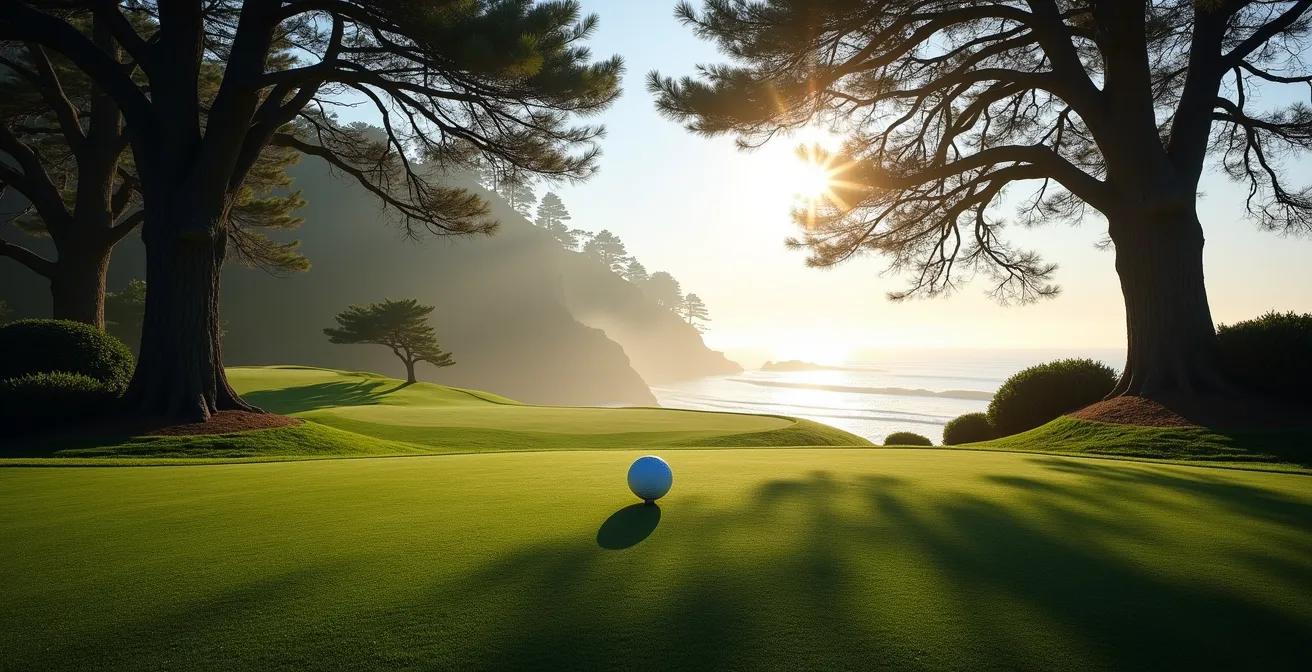
The decision comes down to your personal definition of value. As the comparison below shows, Spyglass Hill offers a championship-level challenge for a significantly lower green fee. If your priority is a pure, stern test of your game, Spyglass may offer a better return on investment. If you are seeking the iconic moments, the photos on the 7th and 18th holes, and the historical weight of walking in the footsteps of legends, then Pebble Beach remains the undeniable choice.
| Factor | Pebble Beach | Spyglass Hill |
|---|---|---|
| Green Fee | $675 | $475 |
| Difficulty | Challenging greens & wind | Often considered toughest |
| Views | 9 oceanside holes | Forest & ocean mix |
| History | 6 US Opens, bucket list status | Pure golf challenge |
| Best For | Once-in-lifetime experience | Serious golf test |
Key Takeaways
- The true cost of a guaranteed round at Pebble Beach approaches $3,000 when factoring in the mandatory two-night resort stay.
- The value of the experience is subjective and depends on prioritizing iconic views and history over pace of play and per-shot cost.
- Mental management is as crucial as physical skill, from handling the pressure of key shots to accepting the realities of a six-hour round and bumpy greens.
Why Leaving Uphill Putts Short Is a Mental Error, Not a Physical One?
On a course as expensive and prestigious as Pebble Beach, a unique form of pressure manifests on the greens. The knowledge that each stroke carries a significant dollar value can lead to tentative play, a phenomenon most evident in putting. Amateurs, overwhelmed by the moment and a desire to avoid costly mistakes, often become overly cautious. This mental burden is a primary reason why so many uphill putts are left short: it is a failure of commitment, not a failure of technique.
The psychological weight of the moment is immense. As one analysis points out, at $675 per round, the psychological pressure of the green fee can lead to tentative putting. Golfers become focused on avoiding a three-putt, which causes them to “die” the ball at the hole instead of making a confident, accelerating stroke. This defensive mindset is compounded by the tricky nature of the greens themselves, where visual cues can be misleading. As one player recounts, trusting your eyes over your caddie’s experience is a classic mistake.
The biggest surprise of the day came when my caddie told me that my putt would play uphill because the ocean was behind me. I didn’t quite trust him enough, and left the 10-footer about an inch in front of the hole.
– First-time Pebble Beach player, 10 Things I Learned From My First Round at Pebble Beach
This experience is universal. The fear of hitting a putt too far past the hole on a slick, coastal green leads to deceleration and, inevitably, a putt that dies short. Overcoming this requires a conscious mental shift: accept that you will have comeback putts and commit to getting the ball to the hole every time. The cost of the round is a sunk cost; letting it dictate your strategy on the green will only lead to a higher score and greater frustration.
Stay and Play: How to Choose the Perfect Golf Resort for Your Group?
Ultimately, the decision to play Pebble Beach is a decision about which “package” of experience best fits your group’s budget and desires. Viewing the options as distinct tiers of investment—from a high-risk budget attempt to an all-inclusive luxury escape—provides the clearest framework for making a choice. Each level offers a different value proposition, and the “best” choice is entirely personal. It requires an honest assessment of what you want to get out of the trip beyond simply playing the 18 holes.
The “Budget Hunter” is the non-resort guest gambling on the 24-hour call-in. This path offers the pure golf experience at the lowest possible cost but comes with the significant risk of not getting a tee time at all. It’s best suited for flexible, local players or singles. The “Classic Experience” involves staying at The Inn at Spanish Bay or The Lodge, guaranteeing a tee time and a comfortable, high-end resort stay. This is the most common path, balancing cost with certainty. Finally, the “Ultimate Luxury” tier, staying at Casa Palmero, is for those for whom cost is no object and who desire the highest level of exclusivity and service.
This table breaks down the approximate total investment for a single golfer across these different tiers, illustrating the vast range in what a “Pebble Beach trip” can cost.
| Package Type | Total Cost (1 golfer) | What’s Included |
|---|---|---|
| Budget Hunter (24hr booking) | $950 | Green fee + caddie only, no guaranteed tee time |
| Classic Experience (Spanish Bay 2 nights) | $3,150 | 2 nights accommodation, green fee, caddie, guaranteed tee time |
| Ultimate Luxury (Casa Palmero 3 nights) | $6,400+ | 3 nights luxury suite, green fee, caddie, spa access, premium dining |
The final calculation is yours. Is the guaranteed, classic experience worth over $2,000 more than the budget gamble? Is the ultimate luxury of Casa Palmero worth double that of the classic package? By breaking down the cost and what is included, the value of each option becomes clear.
With a comprehensive understanding of the total investment—in money, time, and mental energy—you are now equipped to decide if the Pebble Beach experience aligns with your personal definition of value. The right choice is not about finding the cheapest option, but the one that delivers the most memorable return on your investment.