
Choosing the right golf resort for a group isn’t about finding the cheapest green fee; it’s about maximizing the “Total Experience Value” for every member.
- Guest privileges are your most powerful tool for securing prime tee times and avoiding logistical friction points.
- The quality of the non-golf “amenity ecosystem” directly impacts the trip’s success for the entire group.
Recommendation: Shift your focus from a simple cost-per-round analysis to a holistic ‘cost-per-memory’ evaluation to guarantee a successful trip.
As the designated leader for your group’s next golf getaway, the pressure is on. The easy route is to find a famous course or a cheap package deal. But a truly legendary trip—the one talked about for years—is built on more than just 18 holes. It’s about crafting an experience that caters to the scratch golfer, the casual player, and even the partners who would rather be at the spa than on the fairway. The secret isn’t just in the course, but in the resort’s entire value proposition.
Most guides focus on course rankings or budget tips. While important, they miss the organizer’s core challenge: navigating the logistical friction points and balancing the diverse expectations of a group. This guide takes a different approach. We’ll introduce the concept of Total Experience Value (TEV), a framework for evaluating a resort not just on its price tag, but on its ability to deliver a seamless, memorable, and valuable experience for every single person in your party. We will explore how to analyze everything from tee time accessibility and course conditions to the quality of the post-round amenities and non-golfer itineraries. By the end, you’ll have a strategic playbook to move beyond the scorecard and plan a trip that truly delivers.
For those who appreciate the beauty of a perfect swing, the following video offers some visual inspiration, showcasing the form and power of some of golf’s greatest players. It’s a reminder of the artistry that makes this game so captivating.
To help you navigate these crucial decisions, this guide is structured to address the key questions and strategic considerations you’ll face as a group leader. Explore each section to build a comprehensive plan for your next golf vacation.
Summary: A Strategic Guide to Planning Your Group Golf Vacation
- Unlimited Golf Packages: Are They Really a Good Deal for Your Stamina?
- Kids on Course: Which Resorts Offer the Best Junior Programs?
- Resort Guest Privilege: How Staying On-Site Guarantees Morning Tee Times?
- Spousal Itineraries: What to Do at a Golf Resort If You Don’t Golf?
- Tournament Ready: Do Resort Courses Maintain Green Speeds for Daily Play?
- Spa and 19th Hole: Identifying Resorts with the Best Post-Round Facilities
- Is Pebble Beach Golf Links Really Worth the $600+ Green Fee for Amateurs?
- Private Membership: Is the Cost of a Country Club Justified for Your Lifestyle?
Unlimited Golf Packages: Are They Really a Good Deal for Your Stamina?
The “all-you-can-golf” package is one of the most tempting offers in the golf travel world, a sector that has grown into a massive global industry. In fact, the golf tourism market is a significant economic driver, with a global market size of $23.58 billion USD in 2024. These packages promise endless rounds for a fixed price, but their true value depends entirely on your group’s stamina and the fine print. For a group leader, the key is to perform a break-even analysis. Is your group realistically going to play 36 holes every day, or will social time, weather, and fatigue limit you to just one round?
Most golfers on a trip average about 1.5 rounds per day. Before committing, you must factor in the “hidden” costs that are rarely included. Mandatory cart fees, which can range from $30 to $60 per round, can quickly erode the perceived savings. Furthermore, most resorts have strict replay booking windows, often only allowing you to book your second round on the same day or 24 hours in advance, making advance planning difficult.
A prime example is the Pinehurst Resort’s Premier Golf Package. It bundles unlimited golf, including access to premium courses like No. 2, with daily breakfast and dinner. This creates immense perceived value and simplifies budgeting. However, it also requires a minimum two or three-night stay, ensuring the resort meets its revenue thresholds. This illustrates a key principle: resorts design these packages to maximize their yield, not necessarily your playing time. The best approach is to compare the package price against the à la carte green fees for your travel dates and the number of rounds you’ll realistically play.
Kids on Course: Which Resorts Offer the Best Junior Programs?
For groups that include families or are looking to foster the next generation of golfers, the quality of a resort’s junior program becomes a critical factor. A great program isn’t just about babysitting; it’s about providing high-quality, engaging instruction that can ignite a lifelong passion for the game. The best resorts invest in certified professionals to lead these camps. The gold standard is programs where all instructors are PGA of America Professionals, ensuring a consistent and expert level of coaching.
When evaluating a junior program, look for a structured curriculum that caters to different skill levels. For instance, the junior academy at Desert Willow Golf Resort, led by an award-winning PGA professional, utilizes the U.S. Kids level system to progress young golfers from beginners upwards. Key features of a top-tier program include small student-to-teacher ratios for personalized feedback, access to world-class practice facilities, and fun, competitive formats like the PGA Junior League, which uses a team-based scramble format to make the experience less intimidating and more social.

As the image shows, the ideal learning environment focuses on hands-on instruction in a supportive setting. The presence of dedicated practice areas, proper equipment, and enthusiastic coaches are all signs of a resort that is genuinely committed to youth development. For a group leader, choosing a resort with a strong junior program can be a major value-add, providing a fantastic experience for the kids and freeing up the adults for their own rounds, confident that their children are in good hands.
Resort Guest Privilege: How Staying On-Site Guarantees Morning Tee Times?
For any golf group, securing desirable morning tee times is one of the biggest logistical friction points. This is where the single greatest advantage of staying on-site comes into play: resort guest privilege. Most premier golf resorts operate on a strict priority system for booking tee times, and understanding this hierarchy is crucial for a group leader. Public or off-site players often have the most restricted access, typically only able to book 7-14 days in advance and often limited to less desirable afternoon slots. On-site hotel guests, however, are granted a significantly wider booking window.
This “guest status” can be the difference between playing a pristine course at 8:00 AM or baking in the afternoon sun at 2:00 PM. The most coveted tee times are often blocked out for members first, followed by a large block reserved exclusively for hotel guests. These guests can frequently book their rounds 60-90 days in advance, a critical advantage for coordinating a large group. Package holders may get priority over the general public, but they still fall behind on-site guests in the pecking order.
This table clearly illustrates the booking power that comes with staying at the resort.
| Priority Level | Guest Type | Advance Booking Window | Prime Time Access |
|---|---|---|---|
| 1 | Club Members | 14-30 days | Unlimited |
| 2 | On-Site Hotel Guests | 60-90 days | After members |
| 3 | Package Holders | 30-60 days | Limited slots |
| 4 | Public/Day Players | 7-14 days | Afternoon only |
To leverage this system effectively, you must book your accommodations *before* attempting to secure tee times. Once your lodging is confirmed, contact the golf concierge immediately to take advantage of your enhanced booking window. For groups larger than four, request consecutive tee times at the moment of booking to ensure your party can play together. This strategic approach transforms tee time booking from a stressful gamble into a predictable advantage.
Action Plan: Auditing Your Resort’s Booking Power
- Points of contact: List all official booking channels where guest status is recognized (e.g., dedicated concierge, online portal).
- Collecte: Inventory the resort’s specific policies for guests (exact booking window, group size limits, course rotation rules, blackout dates).
- Cohérence: Confront these policies with your group’s non-negotiable needs (e.g., “we must have three consecutive tee times before 9 AM”).
- Mémorabilité/émotion: Identify the unique booking perks that create value (guaranteed morning slots, access to a members-only course, caddie program priority).
- Plan d’intégration: Create a booking timeline starting 90+ days out and assign a point person to execute the plan with the concierge.
Spousal Itineraries: What to Do at a Golf Resort If You Don’t Golf?
A successful group trip often depends on the happiness of the non-golfers. A resort that treats non-golf activities as an afterthought is a recipe for a divided and unhappy group. The best destinations understand the importance of the “amenity ecosystem” and create parallel luxury experiences for those who aren’t playing 18 holes. As the group leader, evaluating the quality and variety of these non-golf options is a key part of calculating the Total Experience Value for everyone involved.
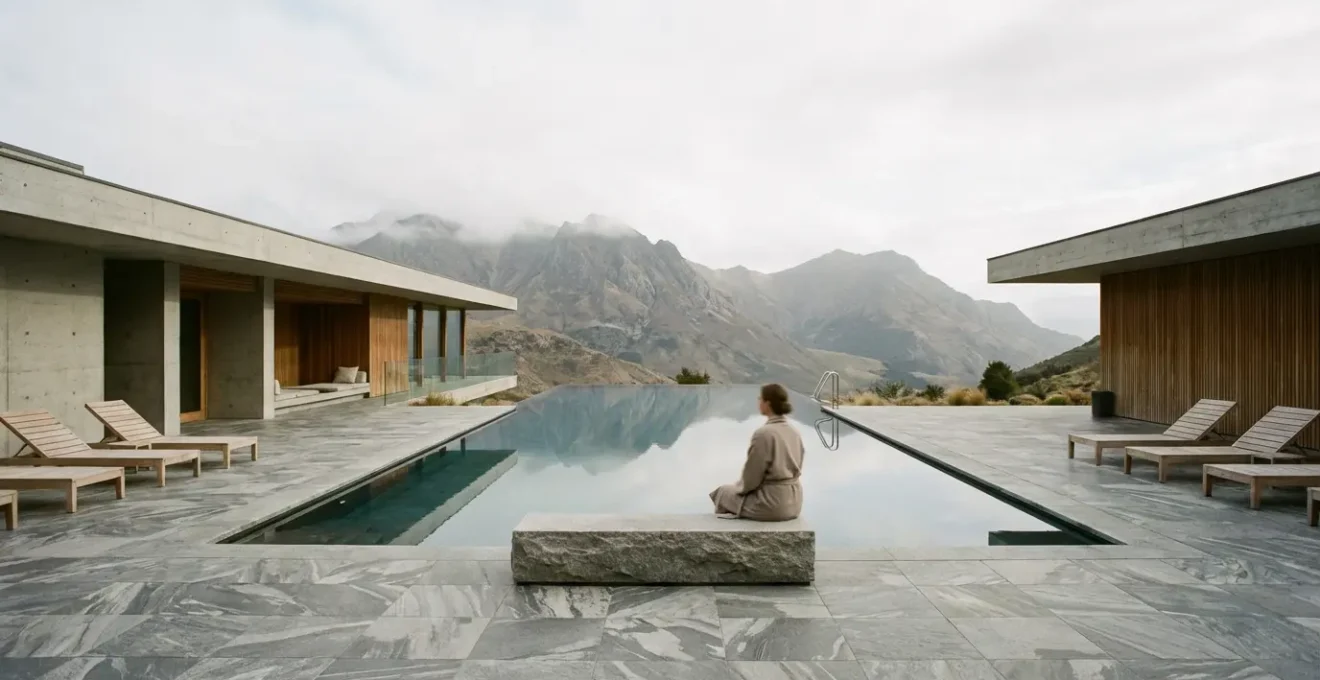
Look beyond a simple listing of a “pool and spa.” A premier resort will offer a comprehensive itinerary. Consider the case of Beaver Creek Resort, which provides a rich vacation experience for all guests, not just golfers. With over a dozen lodging options, boutique shopping, and more than 20 dining choices, it creates an environment where non-golfers have a full and engaging day. This includes access to hiking, world-class spas, cooking classes, and vibrant village atmospheres. This demonstrates how elite resorts build a complete destination, ensuring the “Golfer-to-Non-Golfer Ratio” in your group is well-balanced with activities for all.
The goal is to find a resort where the non-golfers feel like they are on a luxury vacation, not just waiting for the golfers to finish. Key indicators of a strong non-golf program include a full-service spa with a diverse treatment menu, multiple dining venues ranging from casual to fine dining, curated local excursions, and high-end retail options. When the non-golfers are raving about their day at the spa or their mountain hike, you’ve chosen the right resort.
Tournament Ready: Do Resort Courses Maintain Green Speeds for Daily Play?
Watching a professional tournament on TV, you see lightning-fast greens that look both thrilling and terrifying. But are those conditions what you really want for your group’s vacation? The answer is almost certainly no. A critical question for any group leader is whether a resort maintains its course for enjoyable daily play or for punishing tournament-level difficulty. The speed of the greens, measured by a device called a Stimpmeter, is a key indicator. For enjoyable resort golf, the ideal speed is a medium-fast pace between 9 and 11 on the Stimpmeter.
According to insights from top destinations like Streamsong, tournament speeds often exceed 12 or 13, a pace that would lead to frustration and five-hour rounds for the average amateur group. A quality resort superintendent knows how to find this balance, providing a pure roll without making the course unplayable. As a leader, don’t be afraid to call the pro shop and ask “What are the greens Stimping at right now?” This single question shows you’re an informed player and helps you set expectations for your group.
Beyond green speed, two other maintenance factors are crucial to ask about. First is aeration. Resorts must periodically punch holes in their greens to keep them healthy, but playing on recently aerated greens is a miserable experience. Always check the resort’s maintenance calendar and ask specifically, “When is your next scheduled aeration?” to avoid booking a trip within 2-3 weeks of the process. Second, inquire about the rough height. While tournament courses grow their rough to 4-5 inches to penalize errant shots, most resorts keep it at a more manageable 2-3 inches to improve playability and pace of play. A resort that prioritizes a fun experience for its guests will manage these conditions for enjoyment, not just for a scorecard challenge.
Spa and 19th Hole: Identifying Resorts with the Best Post-Round Facilities
The golf experience doesn’t end when the final putt drops on the 18th green. The quality of the “19th hole” and other post-round facilities is a massive component of a trip’s Total Experience Value. A truly great resort understands that the social and recovery aspects of a golf trip are just as important as the golf itself. This means moving beyond a simple bar and grill and creating a comprehensive amenity ecosystem designed for relaxation, socializing, and recovery.
A world-class spa is a hallmark of a top-tier golf resort. The Kohler Waters Spa at The American Club is a prime example. Recognized as one of the finest in the nation, it offers treatments specifically designed for golfers, such as deep tissue massage and stretch therapy, to help ease sore muscles after a long day on the course. This integration of a high-end spa focused on golfer recovery is a sign of a resort that truly understands its clientele. When evaluating a resort, check if the spa is conveniently located and if its services are tailored to athletes.
Case Study: The American Club’s Post-Round Excellence
The American Club in Kohler, Wisconsin, exemplifies a holistic approach to post-round luxury. Beyond its celebrated Kohler Waters Spa, the resort offers gourmet dining at the Immigrant Room and casual social settings that feature Wisconsin’s famous cheese selections. This combination creates a comprehensive experience that extends well beyond a traditional clubhouse bar, providing multiple avenues for the group to unwind and connect after their round.
The 19th hole itself should also be evaluated based on your group’s dynamic. Are you looking for a lively sports bar atmosphere, a quiet lounge with fire pits for conversation, or a high-end restaurant for a celebratory dinner? The best resorts offer a variety of options. Look for unique amenities like cryotherapy services for advanced recovery, outdoor patios with course views, or even private cigar lounges. These facilities are what transform a simple golf outing into a luxurious and memorable retreat.
Is Pebble Beach Golf Links Really Worth the $600+ Green Fee for Amateurs?
The question of “worth” is central to planning any high-end golf trip, and nowhere is it more debated than at Pebble Beach, with its green fees north of $600. From a pure cost-per-round perspective, it seems extravagant. However, this is where the group leader must shift from a budget mindset to a “Return on Memory” (ROM) analysis. Bucket-list courses like Pebble Beach aren’t just a round of golf; they are a pilgrimage, an iconic experience that will be talked about for decades. The value is not in the score you shoot, but in the memory of walking the same fairways as legends.
To put the cost in perspective, it’s helpful to compare it to other ultra-exclusive golf experiences. For instance, a round at Shadow Creek in Las Vegas can cost up to $1,250 during peak season, which makes Pebble’s fee seem almost reasonable for a course with its history and oceanfront setting. Maximizing the Pebble Beach experience requires a resort stay, as tee times are reserved for guests of their three properties. The experience is further enhanced by hiring a caddie, who acts as a guide, storyteller, and photographer, ensuring you capture those once-in-a-lifetime moments.
However, if the price is simply too steep for your group, there are incredible alternatives that offer a similar coastal, bucket-list feel at a more accessible price point. This is about finding the right balance of cost and experience for your specific group.
This comparative table can help you evaluate premier coastal courses to find the best fit for your group’s budget and aspirations.
| Course | Peak Green Fee | Ocean Holes | Accessibility |
|---|---|---|---|
| Pebble Beach | $625 | 8 holes | Resort guest priority |
| Bandon Dunes | $365 | 16 holes | Stay & play packages |
| Cabot Links | $425 | 18 holes | Resort packages available |
| Kiawah Ocean | $425 | Resort guests only |
Key Takeaways
- The best group golf trips are planned by focusing on the “Total Experience Value” for everyone, not just the lowest price.
- Leveraging on-site guest status is the single most effective strategy for securing prime tee times and avoiding logistical headaches.
- A resort’s non-golf amenities are not an afterthought; they are a critical component of a successful and inclusive group vacation.
Private Membership: Is the Cost of a Country Club Justified for Your Lifestyle?
After several successful golf trips, a natural question may arise for your group: is it time to stop renting experiences and invest in our own? The discussion of joining a private country club often follows. This shifts the financial calculation from a one-time vacation cost to a long-term lifestyle investment. The traditional model of a private club involves a hefty initiation fee, monthly dues, food and beverage minimums, and potential assessments. A thorough cost-benefit analysis is essential before making such a significant commitment.
To determine the “true” cost-per-round at a private club, you must calculate the total annual outlay and divide it by the number of rounds you realistically expect to play. If this number is comparable to or less than playing premium public courses in your area, and you value the convenience and community, it might be a justifiable expense. The benefits often extend beyond golf, including valuable business networking opportunities, family-friendly social events, and access to other amenities like tennis and swimming.
However, the classic country club model is no longer the only option. The golf industry is evolving to meet modern demands for flexibility and affordability. New membership models are emerging that provide an alternative to the high-cost, high-commitment structure of traditional clubs. For example, some innovative programs offer unlimited-use memberships for as little as $65-$75 per month, delivering many of the benefits of a private club without the prohibitive upfront cost. Before committing to a traditional membership, it’s wise for your group to explore these modern alternatives or consider trial memberships to see if the lifestyle is a good fit.
Now that you are equipped with this strategic framework, you can approach planning your next trip not just as an organizer, but as an architect of a memorable experience. Start by applying the “Total Experience Value” lens to your resort options to build a golf vacation that will exceed everyone’s expectations.