
Augusta National’s legendary status stems not from simple exclusivity, but from a meticulously engineered ecosystem where nature and technology are manipulated to achieve an ideal of impossible perfection.
- The course’s “natural” beauty is the result of intense agronomic science and theatrical landscaping, timed to peak during Masters week.
- Its traditions and membership policies are carefully curated and evolved to maintain a mystique of controlled prestige.
Recommendation: To truly appreciate the Masters, one must understand the hidden forces—from subsurface air systems to historical land use—that make the dream a reality.
For any golf enthusiast, the name “Augusta National” evokes more than just a golf course; it represents a pilgrimage, a hallowed ground where legends are made and dreams are shattered. The sight of Magnolia Lane, the sound of patrons roaring at a Sunday charge, the vision of a champion donning the Green Jacket—these are the elements of a mythos carefully constructed for nearly a century. It’s a place so ingrained in the sport’s psyche that merely walking its fairways is considered a pinnacle achievement for the world’s best players, let alone the average amateur.
Many articles discuss its beauty, its traditions, and its famous exclusivity. They speak of pimento cheese sandwiches and the champions’ dinner. But this often scratches only the surface. The true mystique of Augusta National lies deeper, not just in what is seen, but in what is unseen. If the key to understanding its aura was not its famous privacy, but rather the relentless, scientific pursuit of a manufactured perfection? This isn’t just a golf course; it is an engineered ecosystem, a theatre where every blade of grass, every azalea bloom, and every policy decision is a deliberate act designed to uphold a legend.
This article will not simply revere the tradition; it will deconstruct the mechanisms behind it. We will explore the agronomic science that makes the greens impossibly fast, the curated evolution of its membership, the architectural genius of its most decisive holes, and the historical context that gives the entire landscape its soul. By understanding the *how*, we can truly appreciate the *why* Augusta National remains the ultimate, enduring dream in golf.
To fully grasp the layers of this iconic institution, this guide delves into the specific elements that forge its legendary status. The following sections break down everything from the science of its playing surfaces to the practicalities of planning a once-in-a-lifetime trip.
Summary: The Enduring Allure of Augusta National
- What Makes the Greens at Augusta Faster Than Putting on Glass?
- How Augusta National Evolved Its Membership Policy over the Last 20 Years?
- Amen Corner: The 3-Hole Stretch That Decides the Green Jacket Winner
- Can You Actually Play Augusta National Without Being a Billionaire?
- When Do the Azaleas Bloom: The Science Behind Augusta’s Perfect Appearance?
- 12 Months Out: Why You Need to Plan Years Ahead for Top Courses?
- Touching the Ball: How to Handle a Downhill Putt on Glassy Greens?
- Bucket List Travel: How to Plan a Trip to Major Championship Venues?
What Makes the Greens at Augusta Faster Than Putting on Glass?
The putting surfaces at Augusta are the stuff of legend, often described by players as putting on polished marble or glass. This isn’t an accident of nature; it’s the result of decades of agronomic innovation. While course officials maintain a deep secrecy—as noted by Synthetic Turf International, “stimp meters aren’t allowed through the gates”—most experts estimate the greens speed at around 12 feet on the stimpmeter during tournament week, a formidable pace. However, many believe they can be pushed to 14 or 15 if desired.
The core of this speed lies in two key decisions. First was the historic transition from traditional Bermudagrass to creeping Bentgrass in 1980. Officials believed Bentgrass could be maintained at a lower cut and would provide a more consistent, rapid putting surface year-round. This change fundamentally altered the course’s character. The second, and perhaps more critical, element is the SubAir system installed beneath every green. This technology acts as a giant vacuum, capable of sucking moisture out of the soil at a controlled rate. It gives the grounds crew an almost supernatural ability to control the firmness and speed of the greens, regardless of weather conditions. They can literally dry out a green between playing groups if a rain shower passes through.
This combination of a specific grass species and advanced climate-control technology is the engine of Augusta’s manufactured perfection. It ensures that the primary defense of the course—its treacherous, lightning-fast greens—remains consistent and challenging, cementing its reputation as one of the ultimate tests of a golfer’s nerve.
How Augusta National Evolved Its Membership Policy over the Last 20 Years?
For decades, the membership of Augusta National was its most impenetrable secret, a bastion of tradition and exclusivity. The policy is famously “by invitation only,” and one does not simply ask to join. While the exact cost is also shrouded in mystery, it is widely believed that the initiation fees and annual dues are surprisingly modest for such a prestigious club, as prestige, not profit, is the currency. The total membership at Augusta National is strictly capped at approximately 300 members, a list that has included some of the world’s most powerful business leaders and political figures.
However, the past two decades have seen a significant, albeit carefully managed, evolution in this policy. Facing mounting public pressure regarding its all-male membership, the club made a landmark decision in 2012. This shift exemplifies the concept of “curated tradition,” where the club adapts to modern sensibilities while maintaining absolute control over its narrative. The club’s adherence to its own set of rules remains absolute, with a strict no-shorts policy for members and guests on the course, a rule that reinforces its formal, old-world atmosphere.
Case Study: The Admission of the First Female Members
In August 2012, Augusta National invited former Secretary of State Condoleezza Rice and South Carolina financier Darla Moore to become its first female members. The move ended 80 years of male-only membership. Chairman Billy Payne announced the news, stating it was a “joyous occasion.” This was not a capitulation, but a strategic pivot. By inviting two highly accomplished and respected women, the club addressed its biggest public criticism on its own terms, reinforcing its image as an institution of influence rather than just an old boys’ club. The announcement, covered globally by outlets like ESPN, marked a pivotal moment in the club’s modern history.
This evolution shows that even Augusta’s most entrenched traditions are not static. They are living things, managed and pruned to ensure the club’s mystique and authority endure in a changing world. The secrecy remains, but the face of its membership has begun to reflect a broader vision of power and influence.
Amen Corner: The 3-Hole Stretch That Decides the Green Jacket Winner
If Augusta National is a theatre, then Amen Corner is its dramatic third act. Coined by legendary sportswriter Herbert Warren Wind in 1958, the name refers to the treacherous stretch of holes 11, 12, and 13. It is here, amidst the towering pines and swirling winds around Rae’s Creek, that the Masters is often won or lost. This is not just a collection of difficult holes; it’s a masterpiece of risk-reward architecture designed to test a player’s skill, courage, and mental fortitude under the most intense pressure imaginable.
The trial begins with “White Dogwood,” the par-4 11th. A pond guards the left side of the green, making the approach shot terrifying. With a historic scoring average of 4.303, the 11th hole ranks as the hardest at Augusta National. Next is “Golden Bell,” the jewel-like par-3 12th. At only 155 yards, it seems innocuous, but the unpredictable wind and the narrow, shallow green demand a perfect shot. Anything short, right, or long can find water or sand, leading to a disastrous score. Finally, “Azalea,” the par-5 13th, offers a reprieve—a clear birdie or even eagle opportunity for those who dare to go for the green in two after a well-placed tee shot. This sequence of terror, precision, and temptation makes for unparalleled drama.

The visual above captures the strategic essence of Amen Corner. You can see how Rae’s Creek snakes through the landscape, creating a natural hazard that comes into play on all three holes. The elevation changes and the framing of the greens by bunkers and water create a beautiful but perilous stage, where a single poor decision can end a player’s quest for the Green Jacket.
Can You Actually Play Augusta National Without Being a Billionaire?
For the vast majority of golfers, playing Augusta National is a fantasy on par with space travel. The club’s extreme privacy means there are no public tee times, no charity outings, and no reciprocal arrangements. The primary path to a tee time is to be invited as a guest of one of the 300-odd members. However, the dream is not entirely impossible for those without a connection to the world’s elite. There are a few, exceptionally narrow, paths that can lead to the hallowed grounds.
These avenues require immense luck, dedication, or a very specific career path. They are long shots, but they do exist, offering a glimmer of hope to the determined golf fanatic. The most common “backdoor” entry is for members of the media covering the Masters, who are entered into a lottery for a chance to play the course on the Monday after the tournament. As one lucky winner recounted, the experience is unforgettable:
I was lucky to get picked in the media lottery to play the hallowed grounds the day after Trevor Immelman won the Masters in 2008. To this day I remember every single shot I hit that chilly day.
– Media lottery winner, GolfPass
Beyond the media lottery, other unconventional routes involve a deep commitment to the game or the tournament itself. Working as a caddie at the club is one of the most reliable ways, as caddies are typically allowed to play the course once a year. Similarly, long-term volunteers at the Masters may eventually be rewarded with a round.
Your Action Plan: Potential Paths to Playing Augusta National
- Enter the Lottery: While for tickets, not play, winning the annual Masters ticket lottery is the first step to even setting foot on the grounds as a patron.
- Pursue Golf Journalism: Become a top-tier golf journalist credentialed to cover the Masters and hope to win the media lottery.
- Work as a Caddie: Seek employment as a caddie at Augusta National, a demanding job that often comes with playing privileges.
- Become an Elite College Golfer: Excel as a player on a nearby university golf team, such as Augusta University, as they sometimes get invited to play.
- Volunteer at the Masters: Dedicate years to volunteering at the tournament, which may eventually lead to a rare invitation to play.
When Do the Azaleas Bloom: The Science Behind Augusta’s Perfect Appearance?
The visual splendor of Augusta National during Masters week is as much a part of its identity as the Green Jacket. The explosion of color from thousands of azaleas, dogwoods, and magnolias creates a botanical paradise that seems almost too perfect to be real. This is no accident. The course’s appearance is a masterclass in theatrical landscaping, rooted in its unique history as a former plant nursery.
Long before Bobby Jones and Alister MacKenzie envisioned a golf course, the land was a 365-acre former nursery known as Fruitland Nurseries, established in 1857. This is the secret to its horticultural DNA. The club’s founders inherited a property already rich with a vast array of flora. Instead of clearing the land, they incorporated its natural beauty into the design. This is why each hole at Augusta is named after the tree or shrub with which it is associated, from “Tea Olive” (Hole 1) to “Holly” (Hole 18). The famous white sand in the bunkers isn’t native either; it’s a quartz feldspar known as “Spruce Pine” sand, brought in from the mountains of North Carolina specifically for its dazzling white color and texture.
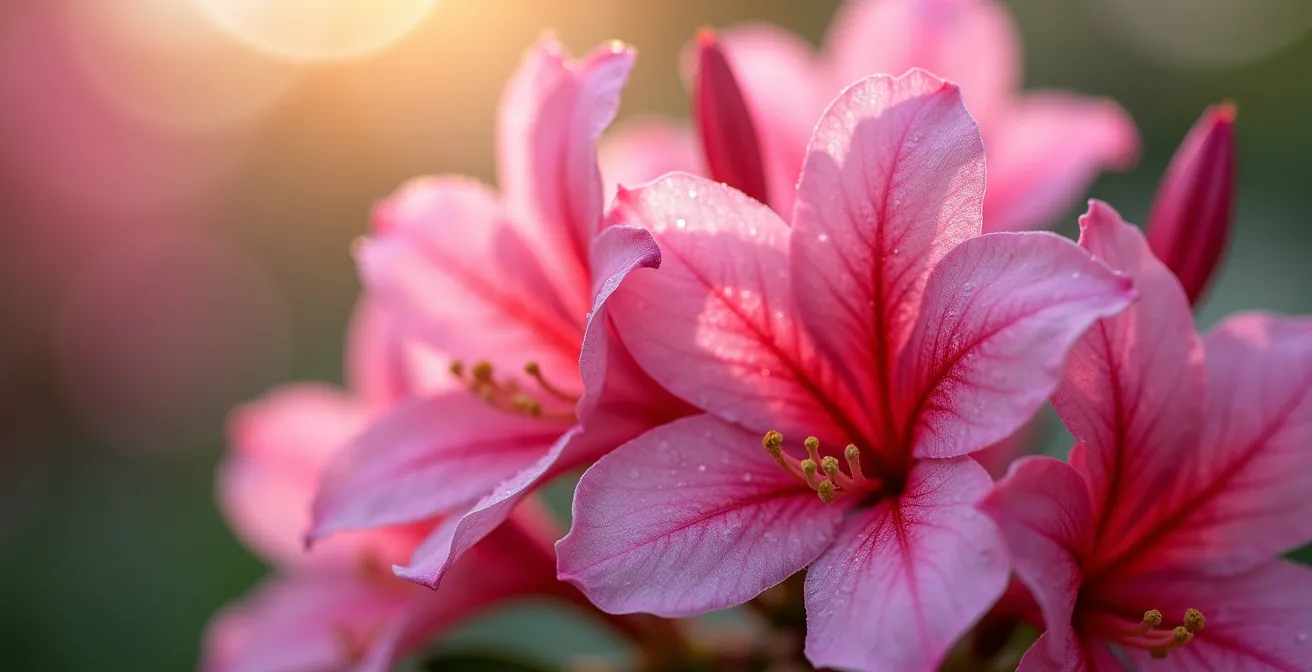
The timing of the blooms, particularly the over 30 varieties of azaleas, is a subject of constant fascination. While the club famously has horticultural experts capable of influencing bloom times—rumors of packing the roots with ice to delay blooming or using warm water to encourage it have circulated for years—the primary factor is selecting a diverse range of early, mid, and late-blooming varieties. This horticultural portfolio-management ensures that, no matter what spring weather arrives, a spectacular display is almost guaranteed for the first full week of April.
12 Months Out: Why You Need to Plan Years Ahead for Top Courses?
Attending the Masters is not a spontaneous trip; it’s a strategic undertaking that often requires years of planning and a significant dose of luck. The demand for tickets, known in the industry as “badges,” is astronomically high, far surpassing any other event in sports. While the club does not release official numbers, it’s widely accepted that the annual Masters ticket lottery receives millions of applications for the very small number of daily tournament and practice round tickets made available to the public. As one hospitality provider puts it, acquiring “Masters Tickets – the toughest ticket in sports” is a bucket-list achievement in itself.
The ticket lottery is the first and most crucial hurdle. Applications for the following year’s tournament typically open in June and close just a few weeks later. This means a prospective patron must be thinking about their trip nearly a full year in advance, simply for the chance to purchase a ticket at face value. Those who are unsuccessful in the lottery must turn to the secondary market, where prices for a single day can run into the thousands of dollars, and a full-week badge can cost more than a new car.
Beyond tickets, securing accommodation in the city of Augusta during Masters week is another major challenge. Hotels and home rentals are booked up months, if not years, in advance, with prices inflated to reflect the overwhelming demand. This entire process reinforces the event’s exclusive nature. It’s not just a golf tournament; it’s a pilgrimage that requires a level of foresight and commitment that weeds out the casual fan, ensuring that those who make it through the gates have truly earned their place.
Touching the Ball: How to Handle a Downhill Putt on Glassy Greens?
For the professionals who compete in the Masters, the dream of winning can quickly become a nightmare on Augusta’s treacherous greens. A downhill putt on these surfaces is one of the most feared shots in all of golf. The combination of extreme speed, subtle breaks, and immense pressure can baffle even the world’s best players. The challenge isn’t just to make the putt, but often just to keep the ball on the green. Players have been known to putt the ball straight into a bunker or Rae’s Creek.
The technique for handling such a putt is one of pure touch and imagination. Amateurs are often advised to feel as if they are simply “touching” the ball with the putter, imparting almost zero force. The goal is to let gravity do the work. Some caddies will advise their players to aim for a spot several feet to the side of the hole, playing for breaks that are invisible to the naked eye. The ultimate goal is to leave the ball below the hole, as an uphill putt, while still challenging, is infinitely more manageable than another slippery downhill attempt. The fear of a three-putt, or worse, is ever-present.
The history of the Masters is littered with tales of putting disasters that have cost players the tournament. These moments serve as stark reminders of the razor’s edge on which players compete. One of the most infamous examples in recent memory sealed the fate of a defending champion.
Case Study: Jordan Spieth’s Meltdown on Hole 12
During the final round of the 2016 Masters, defending champion Jordan Spieth stood on the 12th tee at Amen Corner with a one-shot lead. His tee shot found the water of Rae’s Creek. After taking a drop, his next shot also found the water. He would walk away with a quadruple-bogey 7, a shocking collapse that cost him a second Green Jacket. While the errors began with his tee shot, the sequence highlighted the mental terror that Augusta’s most delicate holes can inflict, where one mistake compounds into a tournament-ending disaster. It’s a testament to how quickly the course can turn a dream into a devastating memory.
Key Takeaways
- Augusta National is an engineered ecosystem, where every detail from grass species to bloom times is meticulously controlled.
- The club’s exclusivity is maintained through a combination of a small, invitation-only membership and an extremely high barrier to entry for spectators.
- Playing the course is a near-impossible dream, but narrow paths exist through media lotteries, caddying, or volunteering.
Bucket List Travel: How to Plan a Trip to Major Championship Venues?
Transforming the dream of visiting Augusta National into a reality is a monumental undertaking, but one that is achievable with the right strategy. A trip to the Masters is more than just attending a sporting event; it is an immersion into the culture and history of golf. Every step, from the moment you pass through the gates, is designed to be a part of the unique experience. Planning for this pilgrimage means treating it like the once-in-a-lifetime event it is, focusing not just on securing a ticket, but on maximizing every moment on the hallowed grounds.
The experience varies greatly depending on which day you attend. A Monday or Tuesday practice round offers a more relaxed atmosphere, allowing patrons to bring cameras (a privilege not afforded on tournament days) and see the entire course with fewer crowds. As a bonus, the merchandise shops are fully stocked, making it the best day for securing coveted souvenirs. Wednesday is unique for its beloved Par-3 Contest, a lighthearted family affair where players often have their children or loved ones act as caddies. From Thursday to Sunday, the competitive intensity is palpable, culminating in the legendary drama of the final round.
Ultimately, a trip to Augusta is about witnessing the engineered perfection firsthand. It’s about feeling the dramatic elevation changes that television cannot capture, hearing the distinct sound of a perfectly struck iron shot echo through the pines, and seeing the impossible speed of the greens with your own eyes. It is the final piece of the puzzle, where the legend becomes tangible, and the ultimate dream in golf feels, for a day, within reach.
For any golf enthusiast, the next logical step is to begin the long-term planning process. Start by marking your calendar for the annual ticket lottery application window and begin researching accommodation and travel options to put yourself in the best possible position to experience the magic of the Masters.
Frequently Asked Questions About a Masters Trip
Which day of Masters Week offers the best experience?
Monday practice rounds offer the best shopping day all week, while Wednesday’s Par-3 contest provides unique entertainment value. However, for sheer competitive drama, nothing beats the final round on Sunday.
Can you visit Augusta National without a tournament ticket?
No, Augusta National is a private club and only accessible during tournament days with proper credentials or tickets. There are no public tours at any other time of the year.
What is the most accessible day to walk the course?
Saturday’s Augusta National Women’s Amateur (ANWA) final round is typically the most accessible and affordable day to walk the course while still witnessing high-level competitive golf on the tournament setup.