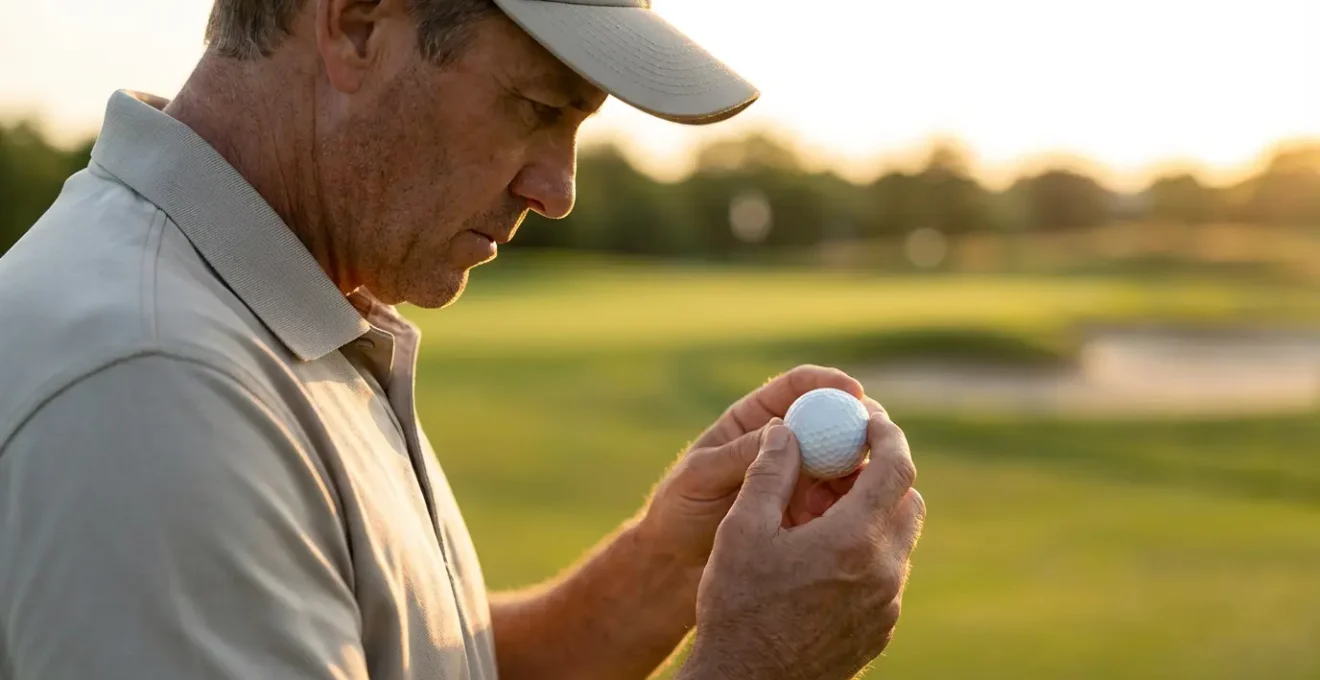
The $50 price tag on a tour ball isn’t for more spin—it’s for the non-negotiable shot predictability that pros depend on to make a living.
- Urethane’s soft, “tacky” material science allows it to grip wedge grooves, providing consistent, controllable spin that harder covers can’t replicate.
- The expensive cast manufacturing process ensures perfect concentricity, meaning the ball flies and rolls true every single time, eliminating performance variables.
Recommendation: For amateurs, the choice depends entirely on whether your short game is consistent enough to capitalize on the predictable reactions that urethane provides.
Walk down any professional practice range and you’ll notice one constant: every player, from the world number one to the last man in the field, is using a premium, urethane-covered golf ball. The amateur golfer sees the $50+ per dozen price tag and rightfully asks, “Why? Is it really worth it for my game?” The common answers—”more spin,” “better feel”—are true, but they’re incomplete. They are symptoms, not the root cause.
The real reason is far more technical and, frankly, economic. Tour professionals are not just playing a game; they are running a business where every single shot has a financial consequence. They don’t choose urethane for a vague sense of “feel.” They choose it for its material science, which delivers an unparalleled level of shot-to-shot predictability. This predictability is not a luxury; it’s a prerequisite for competing at the highest level. It’s the difference between a routine up-and-down and a costly bogey.
This article will take you inside the ropes, moving beyond the marketing slogans to dissect the specific performance characteristics that make urethane a non-negotiable piece of equipment for a touring pro. We will explore the physics of spin, the realities of durability, the complex manufacturing that drives the cost, and ultimately, help you determine if that same technology can truly benefit your own game.
To understand the complete picture, this guide breaks down the core differences and what they mean for performance on the course. We’ll cover everything from how the ball interacts with your wedges to why lake balls may not be the bargain they appear to be.
Contents: The Urethane Deep Dive
- The Check Up: How Urethane Interacts with Wedge Grooves for Spin?
- Durability Check: Is Urethane More Fragile Than Surlyn on Cart Paths?
- Cast vs Injection: Why Is Making a Urethane Cover So Expensive?
- Lake Balls: Does Water Absorption Ruin a Urethane Core?
- Direct-to-Consumer: Are $30 Urethane Balls as Good as the Big Brands?
- Surlyn vs Urethane Covers: Which Soft Ball Lasts Longer Than One Round?
- Getting Up and Down: The Skill That Save Par 60% of the Time for Pros
- One Wedge, Three Shots: How to Manipulate Trajectory Around the Green?
The Check Up: How Urethane Interacts with Wedge Grooves for Spin?
The fundamental difference between urethane and its harder counterpart, Surlyn (or ionomer), begins at a microscopic level. A Surlyn cover is a slick, durable thermoplastic. When it meets the face of a wedge, it tends to skid up the face for a fraction of a second before the grooves can grab it. A thermoset urethane cover, however, is much softer and tackier. It doesn’t skid; it grips. This extended contact time, where the cover material momentarily deforms and presses into the grooves, is the engine of short-game spin.
This “grab” is what allows a professional to generate consistently high spin rates on delicate shots around the green. Robot testing provides a stark illustration of this difference. On a 40-yard wedge shot, for instance, a premium urethane ball like the Callaway Chrome Tour X can generate 6,343rpm. In contrast, harder Surlyn balls often struggle to break 4,000rpm on the same shot. The performance gap becomes even more dramatic in wet conditions, where urethane’s grip is essential. Indeed, comprehensive testing reveals a massive difference, where a urethane ball can maintain 6,026 rpm vs 2,000 rpm for a Surlyn ball in wet tests. For a pro, this isn’t about more spin for the sake of it; it’s about having a predictable, repeatable reaction they can trust their livelihood to.
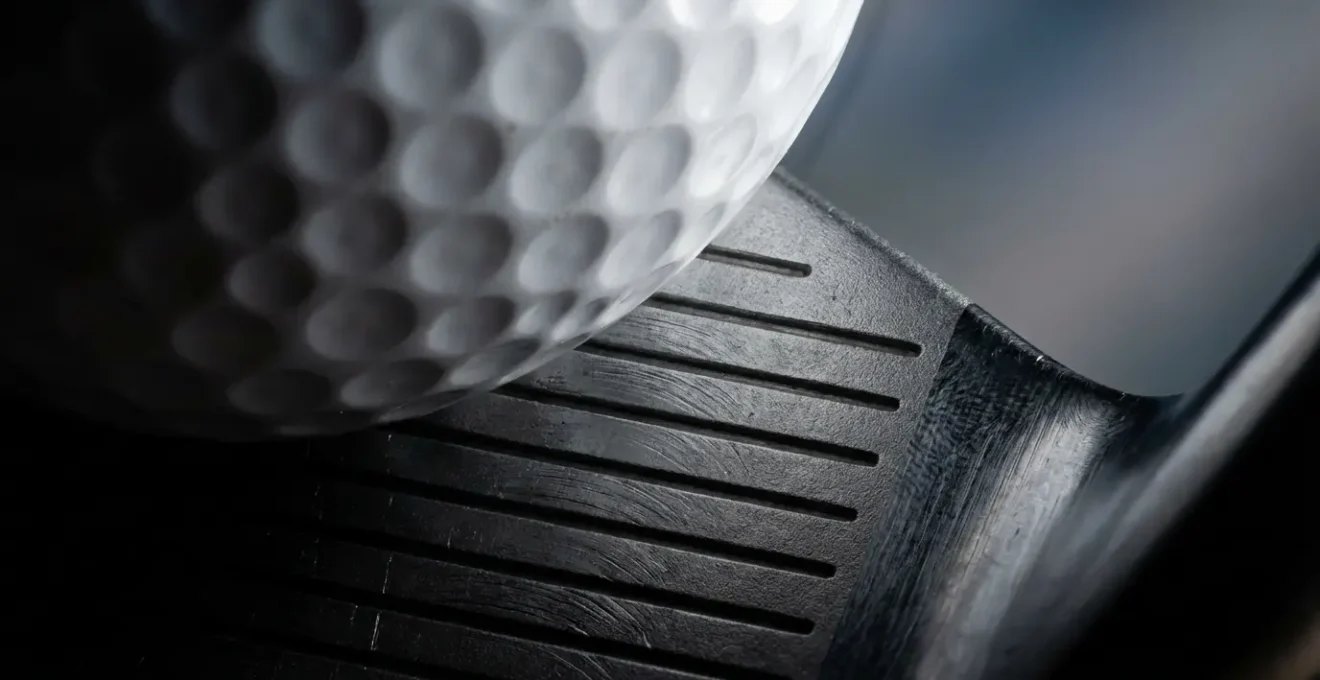
As this image shows, the material science is designed for maximum friction. The urethane cover deforms into the sharp edges of the wedge groove, creating the shear force necessary for high spin. This is why pros can hit a low, checking pitch that stops on a dime—a shot that is nearly impossible to execute with consistency using a harder cover.
Durability Check: Is Urethane More Fragile Than Surlyn on Cart Paths?
One of the most common beliefs among amateur golfers is that urethane balls are fragile. A single encounter with a cart path or tree can leave a noticeable scuff, leading many to conclude they lack durability. While it’s true that urethane is more susceptible to scuffing from blunt impacts (abrasion), this overlooks a more critical form of durability for performance: shear resistance. Shear resistance is a material’s ability to withstand being cut or torn by a sharp edge—precisely what happens when a golf ball meets the grooves of a wedge on a full swing.
Here, urethane is vastly superior to Surlyn. Its soft, resilient nature allows it to absorb the force from the grooves without shredding. A Surlyn ball, being harder and more brittle, is more likely to be “cut” or “shaved” by an aggressive wedge swing, which degrades its aerodynamic properties. So, while a urethane ball may look worse after hitting a cart path, it maintains its performance integrity far better after repeated, well-struck iron and wedge shots. The amateur worries about the cart path; the professional worries about the 100th full wedge shot of the day.
This trade-off between abrasion and shear resistance is the key to understanding golf ball durability from a performance perspective. The following table breaks down how each material handles different types of stress.
| Property | Urethane | Surlyn |
|---|---|---|
| Shear Resistance | Excellent | Good |
| Abrasion Resistance | Moderate | Excellent |
| Cart Path Scuffing | High susceptibility | Low susceptibility |
| Groove Cut Resistance | Superior | Moderate |
Ultimately, a pro’s definition of durability is performance consistency, not cosmetic perfection. A scuffed urethane ball that still spins predictably is more valuable than an pristine Surlyn ball that never spun predictably in the first place. Studies confirm this trade-off, showing that while urethane covers have lower abrasion resistance, their superior shear resistance is what preserves their playability where it counts: on the clubface.
Cast vs Injection: Why Is Making a Urethane Cover So Expensive?
The high price of a premium golf ball isn’t just marketing or brand prestige. It’s a direct reflection of a significantly more complex, precise, and time-consuming manufacturing process. Surlyn covers are made through a relatively simple and fast injection-molding process. In contrast, high-performance tour balls use a method called cast thermoset urethane. As Titleist R&D explains, this process is far from simple: “The cast thermoset urethane cover formulation on Titleist’s top-tier golf ball models is created by a chemical reaction that takes place within the cover mold cavities under heat and pressure.”
This is chemistry, not just molding. The liquid urethane components are poured into molds that encase the ball’s core and mantle layers. These molds are then subjected to a precise, multi-hour heating and curing cycle. This process creates a cover with a perfectly uniform thickness and, most importantly, ensures the cover is perfectly centered around the core. This concentricity is a non-negotiable factor for tour pros. A ball with an off-center core or an uneven cover will wobble in flight and roll unpredictably on the greens. The casting process minimizes these imperfections to a microscopic level.
This meticulous process is slow and expensive, directly contributing to the final cost, which has been rising steadily. Over the past decade, golf ball prices have increased by 45%, with premium models now averaging over $50 per dozen. The key stages of this intricate manufacturing process highlight why:
- Pour liquid urethane materials into precision molds
- Apply specific heat and pressure for chemical reaction
- Maintain precise temperature control for hours during curing
- Achieve extremely tight tolerances in cover thickness
- Ensure perfect concentricity through quality control
When an amateur buys a premium ball, they are paying for this manufacturing precision. For a pro, this precision eliminates a variable, ensuring that a perfectly struck shot produces a perfectly predictable result.
Lake Balls: Does Water Absorption Ruin a Urethane Core?
For the budget-conscious amateur, “recycled” or “refurbished” lake balls seem like an incredible deal—a chance to play a Pro V1 for a fraction of the price. From a tour rep’s perspective, this is a dangerous gamble that completely negates the reason for playing a premium ball in the first place. The issue is water absorption. A urethane cover is more permeable than a Surlyn cover, meaning it allows moisture to seep through to the inner mantle and core layers over time.
Once moisture penetrates the core, it fundamentally alters the ball’s properties. The compression changes, and the ability of the core to transfer energy efficiently at impact is compromised. This results in a “dead” feel, reduced ball speed, and inconsistent performance. The length of time the ball has been submerged is the critical factor. An extensive case study on water absorption shows a clear timeline of degradation: a ball submerged for less than a week might show minimal loss, but after a month, a measurable drop in distance is observed. Beyond three months, the performance becomes wildly unpredictable.
The problem for the consumer is that it’s impossible to know how long a specific lake ball has been underwater. Was it fished out after a day, or has it been sitting at the bottom of a pond for a year? You are introducing a massive, unknown variable into your game. Furthermore, it’s crucial to distinguish between “recycled” balls (simply washed and sorted) and “refurbished” balls. Refurbished balls are often chemically stripped and repainted, a process that destroys the original dimple pattern and aerodynamics, making them perform even worse.
A professional would never consider using a lake ball because it violates the prime directive: eliminate all possible variables. Playing a ball with an unknown history of water damage is the antithesis of this philosophy. You might save money, but you sacrifice the very consistency you were paying for.
Direct-to-Consumer: Are $30 Urethane Balls as Good as the Big Brands?
The emergence of Direct-to-Consumer (DTC) brands has been a major disruption in the golf ball market. Companies like Vice, Snell, and Maxfli now offer multi-layer, urethane-covered balls for around $30-$35 per dozen, challenging the dominance of the $50+ tour balls from major brands. This raises a legitimate question for the amateur: are you giving up performance for that lower price?
The answer, according to extensive independent testing, is surprisingly little. From a pure performance standpoint, the best DTC urethane balls are remarkably competitive with their big-brand counterparts. They are typically made in the same factories and use similar materials and construction methods. The performance gap between top-tier DTC models and major tour balls is often negligible for the vast majority of golfers. Independent testing shows minimal performance difference between the $35 DTC balls and $55 premium balls for most swing speeds.
So where does the cost saving come from? As one MyGolfSpy equipment editor noted, “The biggest cost saving for DTC brands isn’t in the ball’s materials but in the business model – they save hundreds of millions by forgoing PGA Tour sponsorships and traditional retail markups.” Major brands spend enormous sums on tour validation—paying dozens of players to use their product—and on marketing. DTC brands bypass this, selling directly to golfers online and relying on word-of-mouth and independent reviews.
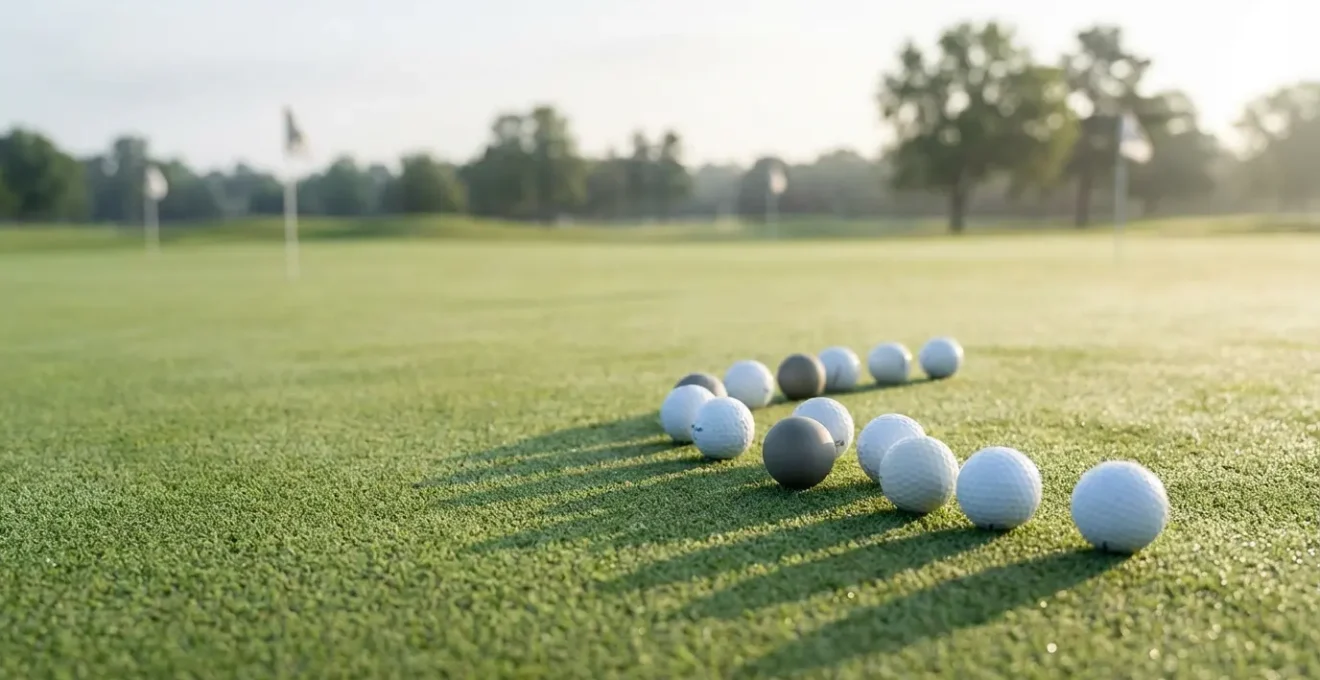
For the amateur wondering if the tour ball is justified, the rise of DTC brands provides a compelling alternative. You can get 95% of the performance for 60% of the price. The choice is no longer a binary between a hard, low-spin “distance” ball and an expensive tour ball. There is now a robust middle ground that offers tour-level technology at a much more accessible price point.
Surlyn vs Urethane Covers: Which Soft Ball Lasts Longer Than One Round?
The concept of “longevity” in a golf ball must be broken into two distinct categories: physical durability and performance durability. As discussed, Surlyn/ionomer covers excel in physical durability. They resist scuffs and cuts from cart paths and trees, often looking almost new after 18 holes. Urethane, being softer, scuffs more easily. However, when we analyze performance durability—how long a ball maintains its intended flight and spin characteristics—the story changes.
A urethane ball’s high spin rate is its key feature, and it is remarkably resilient. Robot testing has shown that a urethane cover can sustain its high-spin properties for approximately 100 full-swing impacts before performance starts to noticeably degrade. A Surlyn ball, on the other hand, starts with significantly less spin but holds that lower spin rate for a longer period, sometimes over 200 impacts. This creates a choice between a shorter window of peak performance (urethane) and a longer plateau of lower performance (Surlyn).
For a tour professional, this choice is simple. They operate exclusively in the peak performance window. Many pros will put a new ball into play every 3-6 holes to ensure they never experience any performance degradation. For them, a ball’s “lifespan” is measured in a handful of holes, not full rounds. The amateur playing a single ball for multiple rounds is operating well outside this professional standard.
The following table provides a clear comparison of how these two cover materials age over time, both physically and in terms of their performance characteristics.
| Aspect | Surlyn/Ionomer | Urethane |
|---|---|---|
| Physical Durability | Superior (resists scuffs) | Moderate (scuffs easier) |
| Performance Consistency | Lower but stable spin | High spin maintained longer |
| Usable Lifespan (Pro) | Not tour-preferred | 1-3 holes maximum |
| Cost per Round | $1-2 | $3-5 |
This highlights the different value propositions. A Surlyn ball offers cosmetic longevity and a stable, albeit lower, level of performance. A urethane ball offers a finite window of elite performance, which is exactly what a professional requires and is willing to pay for.
Getting Up and Down: The Skill That Save Par 60% of the Time for Pros
When you miss a green, the ability to get the ball “up and down”—chipping or pitching it close and making the putt—is what separates low scores from high ones. For a tour professional, this skill, often called scrambling, is the bedrock of their financial success. They are so efficient at it that, on average, top tour professionals convert nearly 70% of their up-and-down opportunities from inside 30 yards. This incredible consistency is not just due to technique; it is heavily reliant on their equipment, specifically a urethane ball.
The predictable, high-spin reaction of a urethane ball allows a pro to commit to their shot with absolute confidence. They know that a specific swing will produce a specific trajectory, bounce, and roll-out. As one PGA Tour Equipment Analyst stated, “For a tour pro, getting up and down is literally how they make their living. The fractional-shot advantage a urethane ball provides over 72 holes translates into thousands, or millions, of dollars over a season.” They are not leaving performance to chance. The choice of a urethane ball is an economic decision to maximize their scoring potential.
For an amateur looking to improve their own short game, adopting a urethane ball can be a significant step, but only if they are willing to practice and learn how to use the extra spin. It’s not magic; it’s a tool that enables a wider range of shots and more precise distance control.
Action Plan: Maximizing Your Short Game Spin Window
- Commit to a urethane ball model to learn its specific reaction and build trust.
- Practice hitting shots with different trajectories (low, medium, high) with the same wedge to see how spin is affected.
- Learn to de-loft the clubface through impact for lower-spinning shots that run out more.
- Master the crisp, downward strike required to create the high-spin “hop-and-stop” pitch shot.
- Trust the predictable reaction of the urethane cover on the second bounce, allowing you to fly the ball closer to the hole.
By following these steps, an amateur can begin to unlock the same performance advantages that professionals rely on every week. The key is to see the ball not just as an object, but as an integral part of a scoring system.
Key Takeaways
- Urethane’s value is in control, not just raw spin; it grips the clubface for predictable reactions that hard covers can’t match.
- The high price of tour balls directly reflects the complex and precise cast manufacturing process required for perfect concentricity and consistency.
- For amateurs, the choice between a $55 tour ball and a $35 DTC urethane ball is more about business models than a significant performance drop-off.
One Wedge, Three Shots: How to Manipulate Trajectory Around the Green?
The true artistry of a professional’s short game lies in their ability to hit multiple, distinct shots using the same wedge. From a low, skidding spinner that checks up hard, to a medium-trajectory pitch with a soft landing, to a high, floating lob that lands with minimal roll—this is what “shot-making” is all about. This versatility is almost entirely enabled by the unique properties of a urethane golf ball. A harder, lower-spinning Surlyn ball simply does not offer the same “predictability window” to work with.
A urethane ball gives a skilled player access to a wide spectrum of spin rates based on their delivery of the club. By altering the angle of attack, clubface loft at impact, and swing speed, a pro can dial in the exact trajectory and spin required for the situation. Testing shows trajectory changes can create a 4,000 rpm variation in spin with the same club. This is the control that pros demand. They aren’t just hitting a “chip shot”; they are executing a “low trajectory, high spin, second-bounce-check” shot.
A ball like the TaylorMade TP5, for instance, has been shown to produce exceptionally high spin on partial wedge shots while maintaining a mid-launch window. This combination is ideal for trajectory manipulation. It allows a player to hit the ball lower to control flight in the wind without sacrificing the stopping power of high spin, or to launch it higher for a softer landing, all while knowing the spin reaction will be consistent. This is the ultimate expression of control, and it’s why every single tour pro has a urethane ball in the bag.
For the amateur, this is the final piece of the puzzle. The investment in a premium ball is an investment in unlocking this potential for shot-making versatility. It opens up a new dimension of short game strategy that goes far beyond simply getting the ball on the green.
The next step for a serious amateur is not just to buy a box of premium balls, but to take them to the practice green. Test them. See for yourself how a different strike creates a different flight and reaction. Only by experiencing this control firsthand will you know if the investment in predictability is right for your game.
Frequently Asked Questions About Urethane Golf Balls
What’s the difference between recycled and refurbished balls?
Recycled balls are simply cleaned and graded by condition, retaining their original construction. Refurbished balls, however, are chemically stripped of their original paint and cover, then repainted and rebranded. This process destroys the original aerodynamic dimple pattern and compromises performance significantly.
How quickly does water affect urethane covers?
Urethane is more permeable than Surlyn, which means water penetration can begin within just a few days of being submerged. The longer the ball is in water, the more moisture reaches the inner layers, negatively affecting its compression and distance.
Can the core be affected by water damage?
Yes, absolutely. Prolonged exposure to moisture allows water to seep through the cover and mantle to the core. This alters the core’s chemical and physical properties, changing its compression and reducing its ability to transfer energy, which creates a ‘dead’ feel and a noticeable loss of distance.